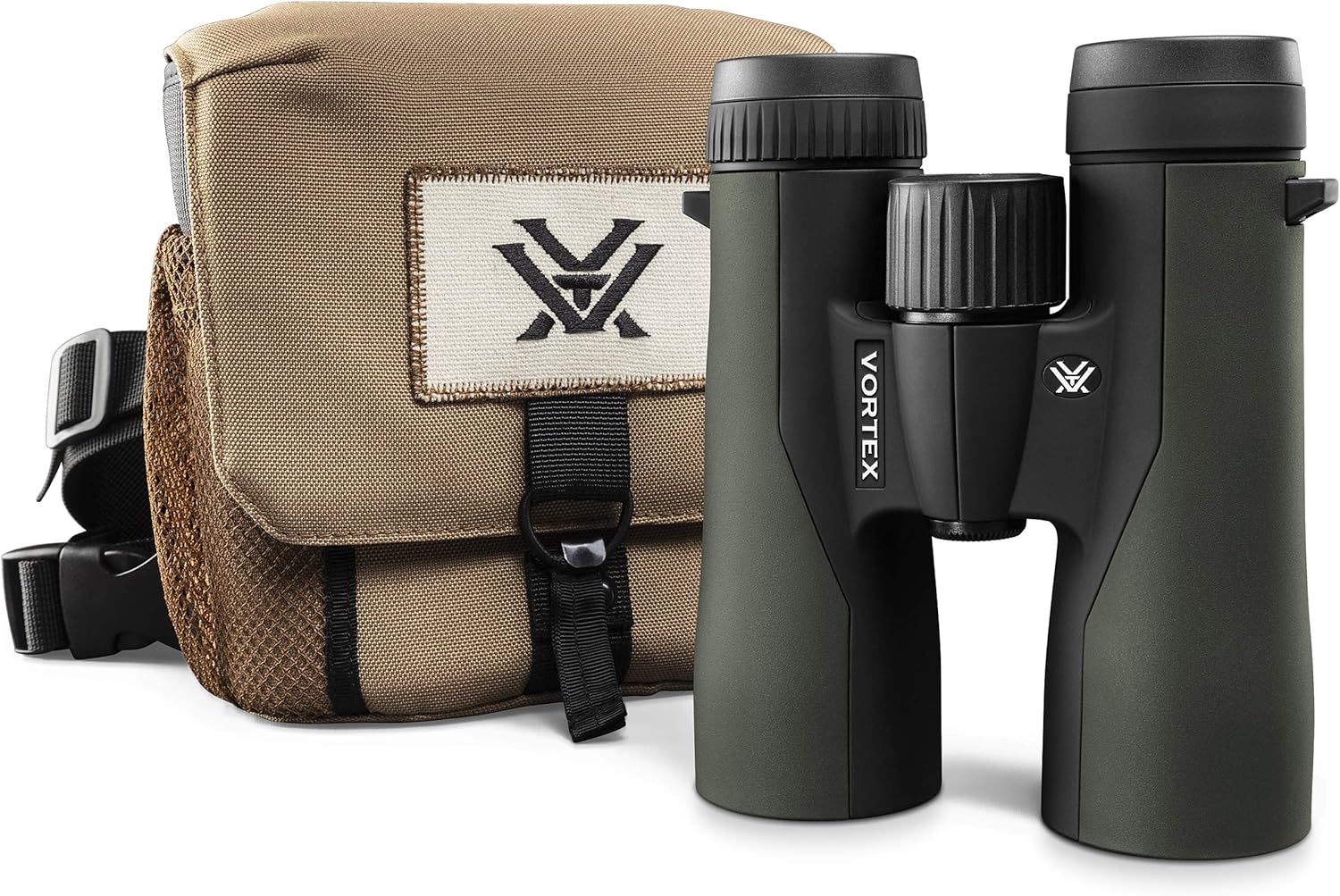

If you’re deciding between optics for wildlife watching, birding, hiking or coastal viewing, this Binoculars vs Spotting Scopes Guide can save you money and make your outdoor experiences far more enjoyable. Both tools bring distant subjects closer, but they serve very different purposes depending on how, where, and how often you explore outdoors.
This guide explains the differences, best uses, who each option suits, realistic budgets, and some excellent current-value recommendations.
Quick Overview: What’s the Difference?
| Feature | Binoculars | Spotting Scope |
|---|---|---|
| Viewing style | Two-eyed | Single eyepiece |
| Magnification | Usually 8x–12x | Usually 20x–60x |
| Portability | Lightweight & wearable | Larger, tripod required |
| Best for | Walking, hiking, wildlife encounters | Long-distance observation |
| Setup time | Instant | Slower |
| Stability | Handheld | Tripod-supported |
In simple terms:
Binoculars are for mobility. Spotting scopes are for distance and detail.
Best Uses for Binoculars
Binoculars are the go-to choice for most outdoor enthusiasts because they are portable, quick to use, and comfortable for long viewing sessions.
Ideal scenarios
- Hiking and walking trails
- Wildlife encounters on the move
- General birdwatching
- Travel and nature holidays
- Coastal walks
- Safari trips
- Sports and outdoor events
Because binoculars hang around your neck or sit in a pocket, they’re perfect when wildlife appears suddenly and disappears just as quickly.
Who should choose binoculars?
Binoculars suit:
- Walkers and hikers
- Casual wildlife watchers
- Travellers wanting lightweight gear
- Families exploring nature
- Beginner birdwatchers
- Anyone who dislikes carrying heavy equipment
For most people, binoculars are the better all-round choice.
Best Uses for Spotting Scopes
Spotting scopes excel when viewing subjects very far away or when observing wildlife without disturbing it.
Ideal scenarios
- Birdwatching at wetlands or reserves
- Watching seabirds from cliffs
- Observing animals across valleys or lakes
- Coastal marine wildlife viewing
- Wildlife photography (digiscoping)
- Viewing from hides or fixed positions
A spotting scope lets you read ring markings on birds or identify distant species impossible to see clearly with binoculars.
Who should choose a spotting scope?
Spotting scopes suit:
- Dedicated birdwatchers
- Wildlife photographers
- Nature reserve visitors
- Coastal wildlife observers
- People observing from hides or vehicles
- Anyone regularly viewing across large open landscapes
If you spend long periods stationary observing distant wildlife, a spotting scope becomes invaluable.
Portability vs Power: The Real Trade-Off
The biggest deciding factor:
Choose binoculars if:
- You move around a lot
- You hike or travel light
- Wildlife appears unpredictably
- You want quick, easy viewing
Choose a spotting scope if:
- You stay in one place to observe
- Wildlife is usually far away
- You need detail for identification
- You don’t mind carrying a tripod
Many serious nature enthusiasts eventually own both.
Realistic Budget Expectations
Good optics are an investment. Cheap options often disappoint.
Binocular budget guide
- Entry level: £70–£150
- Good mid-range: £150–£400
- High-end: £500–£2,000+
Spotting scope budget guide
- Entry level kit: £250–£400
- Solid mid-range: £400–£900
- Premium: £1,000–£3,000+
Remember: spotting scopes also require a stable tripod, adding £80–£300.
Recommended Binoculars (Great Value Picks)
Budget Pick — Nikon Prostaff P7 8×42 (£160–£200)
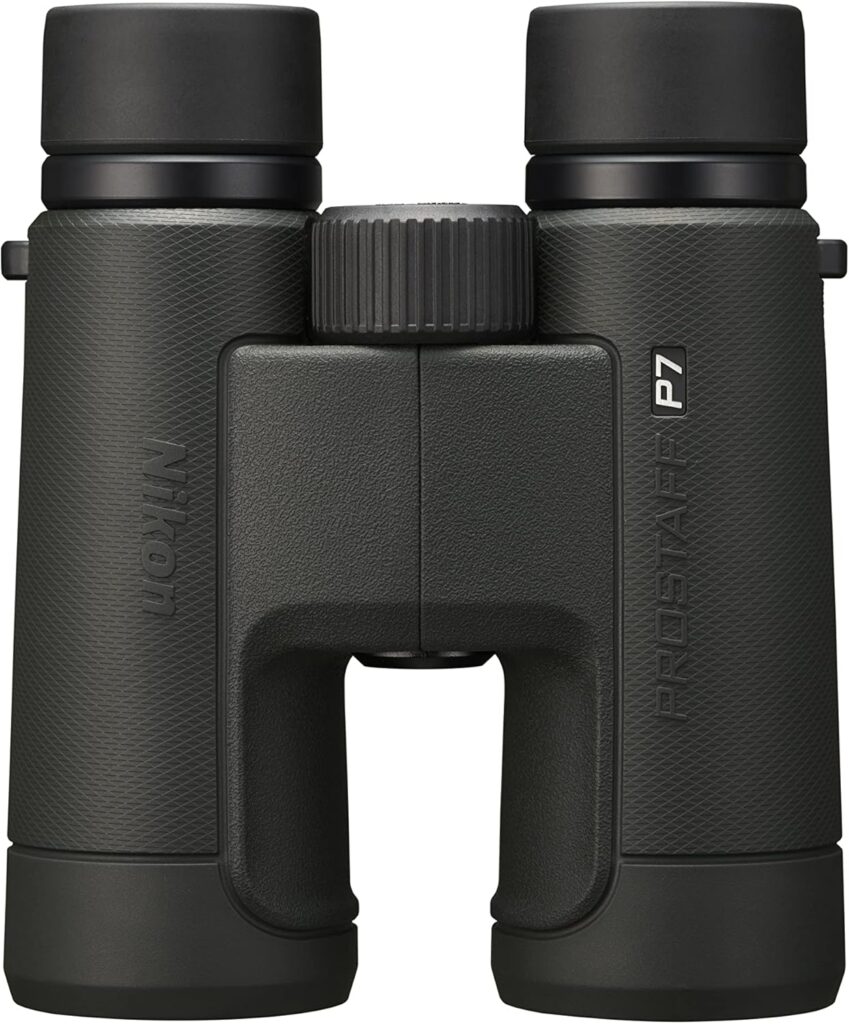
- Bright, sharp image
- Waterproof and durable
- Excellent for beginners
- Lightweight for hiking
Best Mid-Range — Vortex Diamondback HD 8×42 (£220–£280)
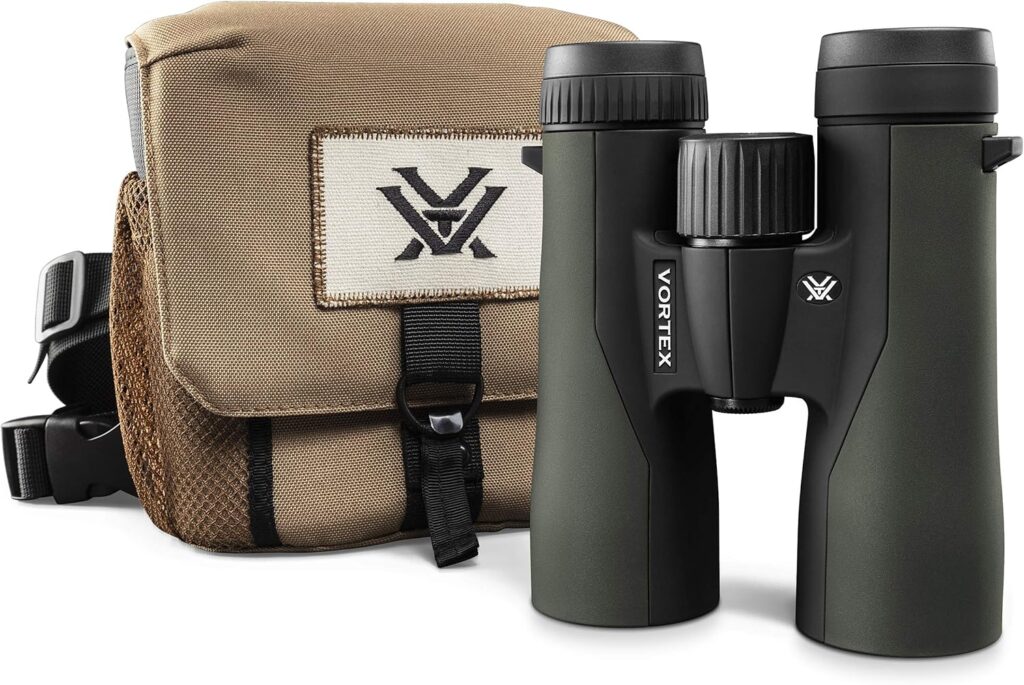
- Outstanding clarity for price
- Rugged build
- Popular with birders and walkers
Premium Choice — Swarovski NL Pure 8×42 (£2,000+)
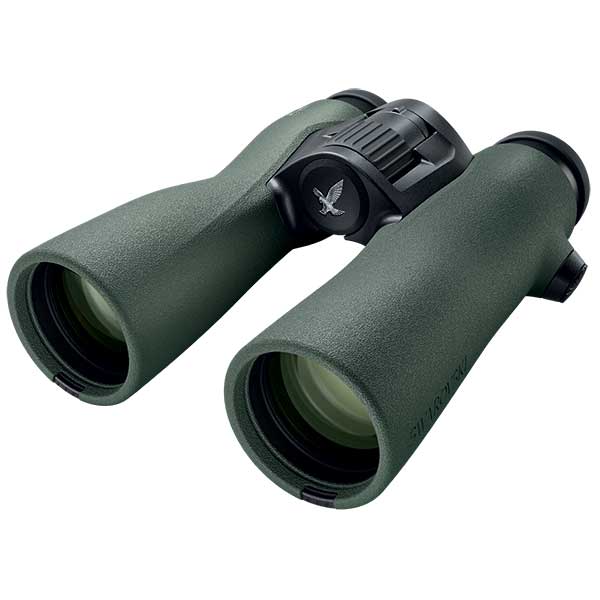
- Exceptional brightness and clarity
- Extremely comfortable viewing
- Top-tier optics for serious users
Recommended Spotting Scopes
Budget Starter — Celestron Ultima 65 (£150–£200)
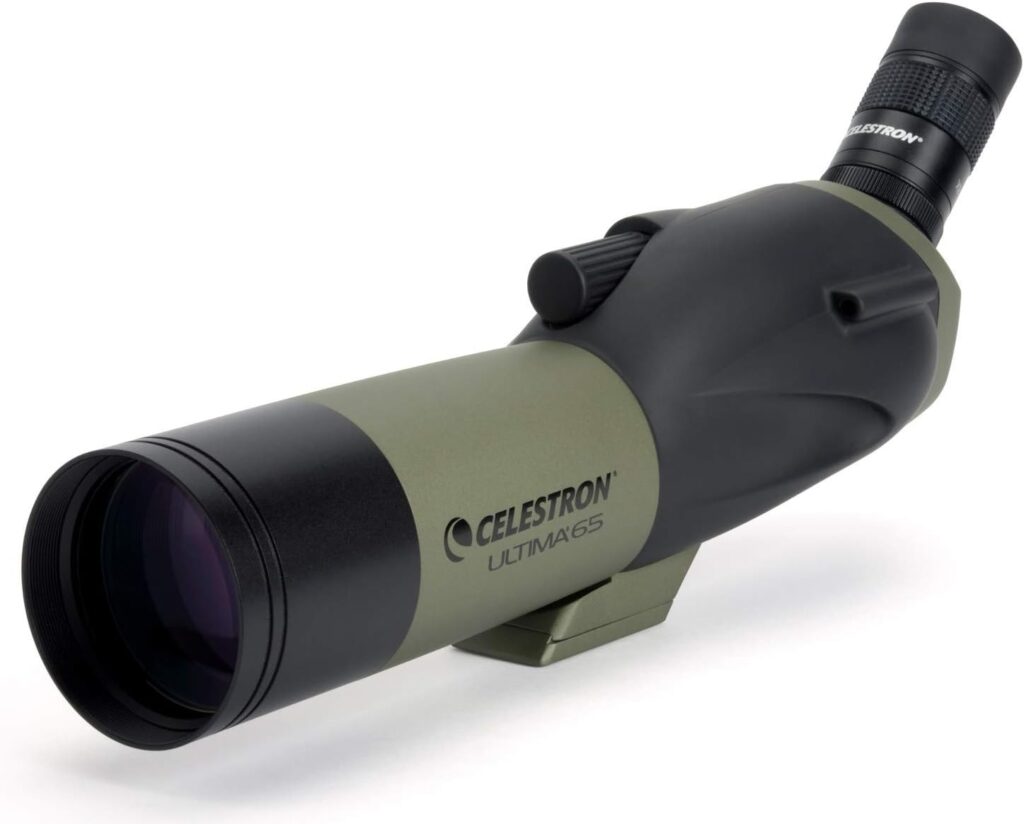
- Great beginner scope
- Good for reserves and coastal viewing
- Lightweight and affordable
Best Value Mid-Range — Vortex Diamondback HD 20–60×85 (£450–£600)
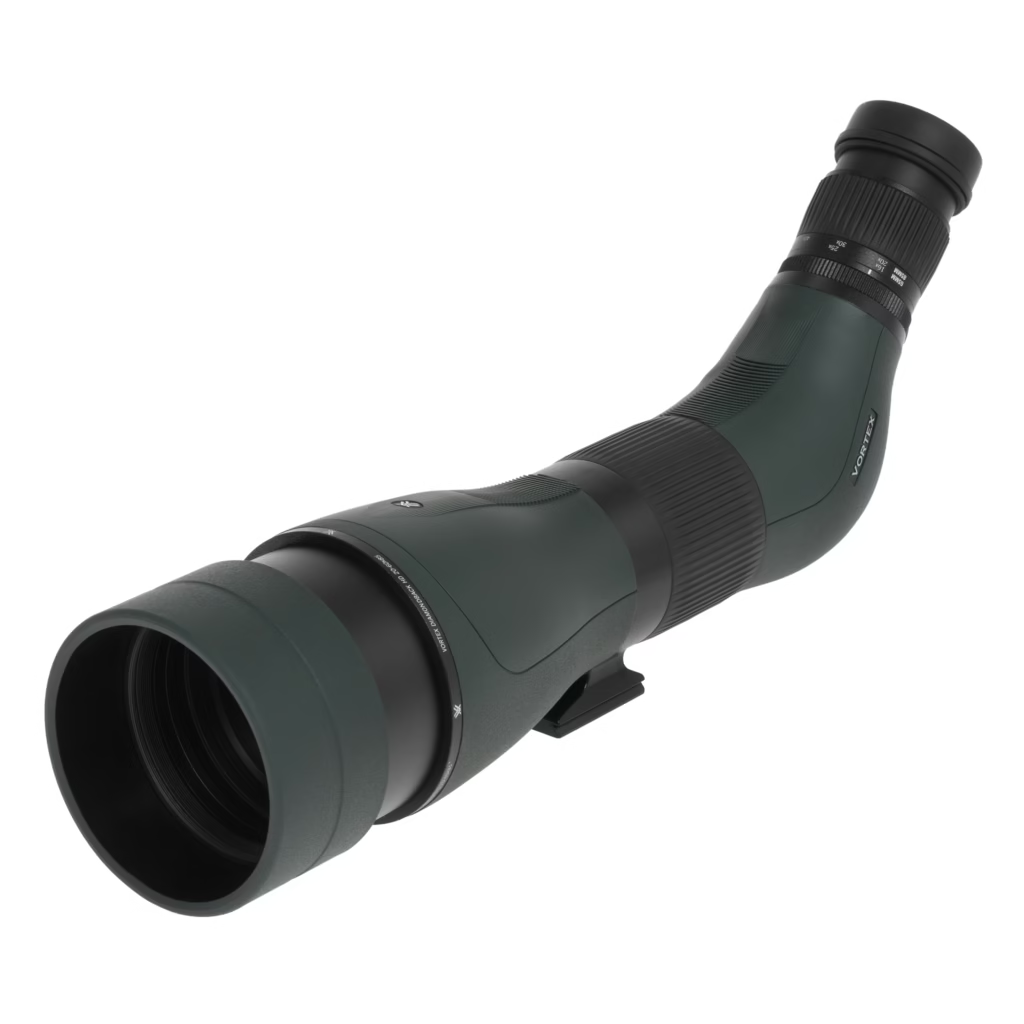
- Excellent performance for price
- Bright image
- Strong warranty
- Popular with birdwatchers
Premium Choice — Swarovski ATS/ATX Series (£2,000+)
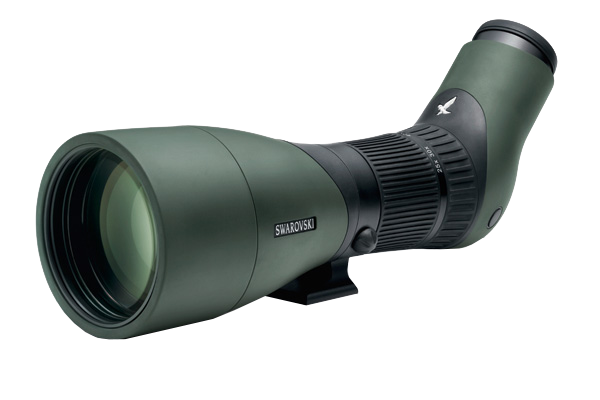
- Stunning clarity
- Exceptional low-light performance
- Professional-level optics
Which Should You Buy First?
For most outdoor adventurers:
= Buy binoculars first
They’re useful almost everywhere and every time you go outdoors.
Later, if you find yourself often viewing wildlife across large distances, consider adding a spotting scope.
Final Verdict
If your outdoor adventures involve walking, hiking, travelling, and spontaneous wildlife encounters, binoculars are the smarter purchase.
If your goal is long-distance observation from hides, coasts, lakes or reserves, a spotting scope offers detail binoculars simply cannot match.
For many nature lovers, the perfect setup eventually becomes:
Binoculars for movement + spotting scope for distance.
Please give our other gear advice articles a read: