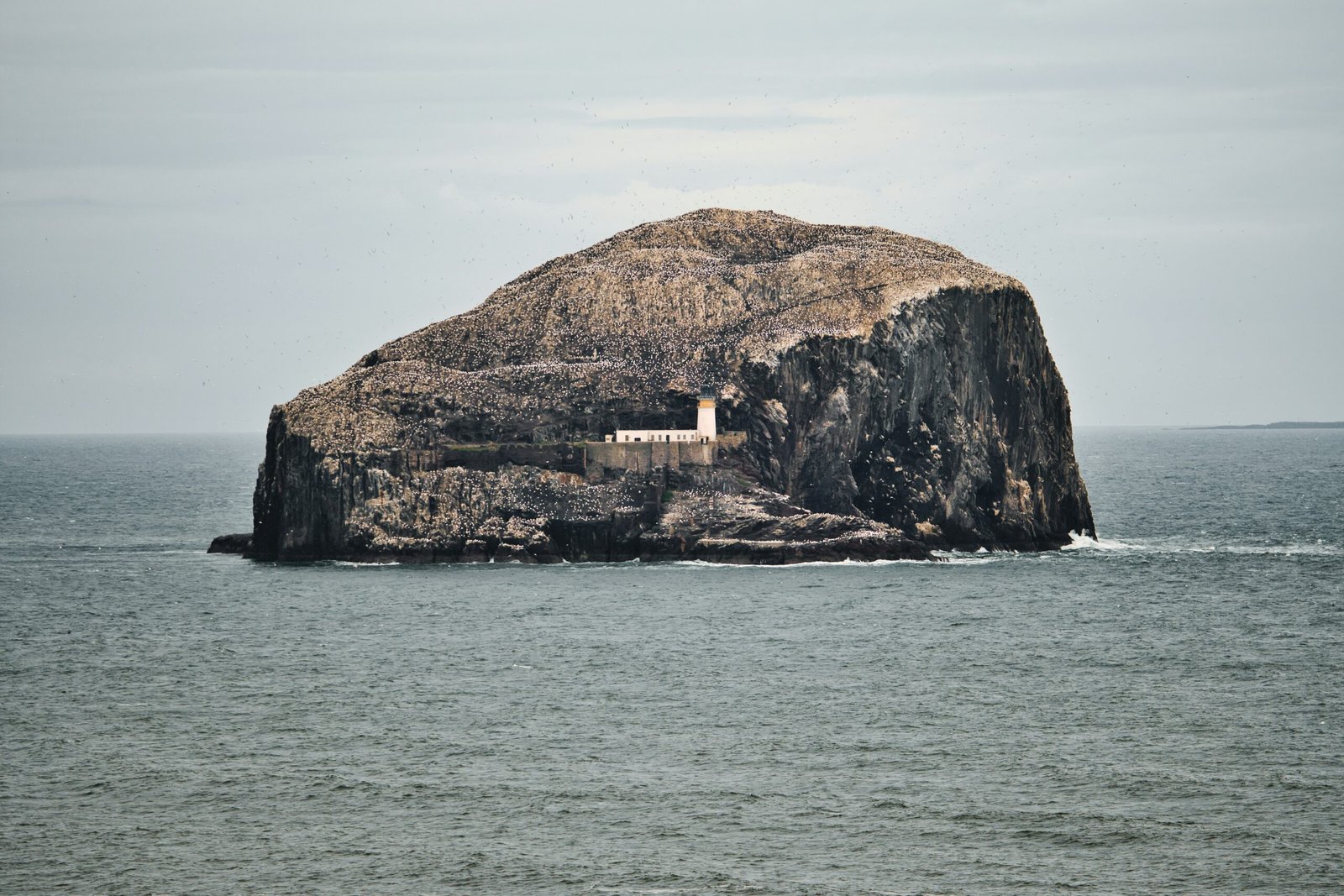

If you’re searching for the very best East Lothian Coastal Paths, you’re in for one of Scotland’s finest coastal adventures. Stretching from Musselburgh to Dunbar, East Lothian’s coastline combines dramatic cliffs, golden beaches, historic harbour villages, nature reserves and some of the country’s most rewarding walking routes. Whether you’re looking for an easy family stroll, a wildlife-rich nature reserve, or a challenging cliff-top hike, there is something here for every visitor.
While many people head straight for the popular beaches, the real charm of East Lothian lies in exploring its lesser-known coves, quiet harbours and hidden viewpoints. The coastline forms part of the famous John Muir Way, but countless shorter circular walks allow you to experience spectacular scenery without committing to a long-distance hike.
Expect to discover colourful fishing villages, volcanic headlands, ancient castles overlooking the sea, thriving seabird colonies, peaceful woodlands and miles of sandy beaches. Along the way you’ll find welcoming cafés, excellent seafood restaurants, historic pubs and plenty of opportunities to spot seals, dolphins and an incredible variety of coastal birds.
Whether you’re planning a day trip from Edinburgh or a relaxing weekend exploring Scotland’s east coast, these are some of the finest coastal walks East Lothian has to offer.
1. North Berwick to Tantallon Castle Coastal Walk
Why Visit?
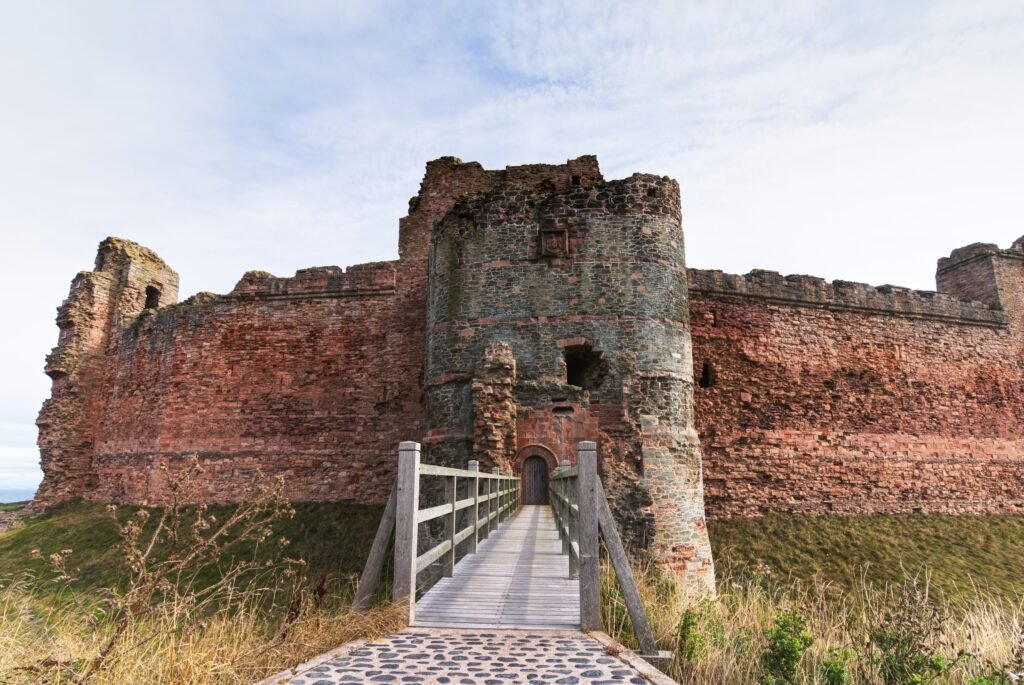
One of East Lothian’s signature walks, this spectacular route links the bustling seaside town of North Berwick with the dramatic ruins of Tantallon Castle. The path hugs the coastline almost the entire way, offering uninterrupted views across the Firth of Forth towards Bass Rock, Craigleith and the Isle of May.
The combination of history, wildlife and scenery makes this one of Scotland’s finest coastal walks.
Walk Details
- Distance: Approximately 5 miles (8 km) return
- Time: 2.5–3 hours
- Difficulty: Easy to moderate
- Mostly well-maintained gravel paths with some gentle inclines.
Parking
Several long-stay public car parks are available around North Berwick town centre, with additional parking close to the harbour and seafront.
Facilities
North Berwick has:
- Public toilets
- Numerous cafés
- Restaurants
- Fish and chip shops
- Ice cream parlours
- Supermarkets
- Outdoor gear shops
Tantallon Castle also has visitor facilities when open.
Wildlife
Keep an eye out for:
- Grey seals offshore
- Guillemots
- Razorbills
- Fulmars
- Kittiwakes
- Gannets flying to and from Bass Rock
- Bottlenose dolphins (occasionally)
Photography Tips
Early morning produces beautiful light across Bass Rock, while sunset creates stunning colours behind Tantallon Castle.
2. Aberlady Bay Nature Reserve
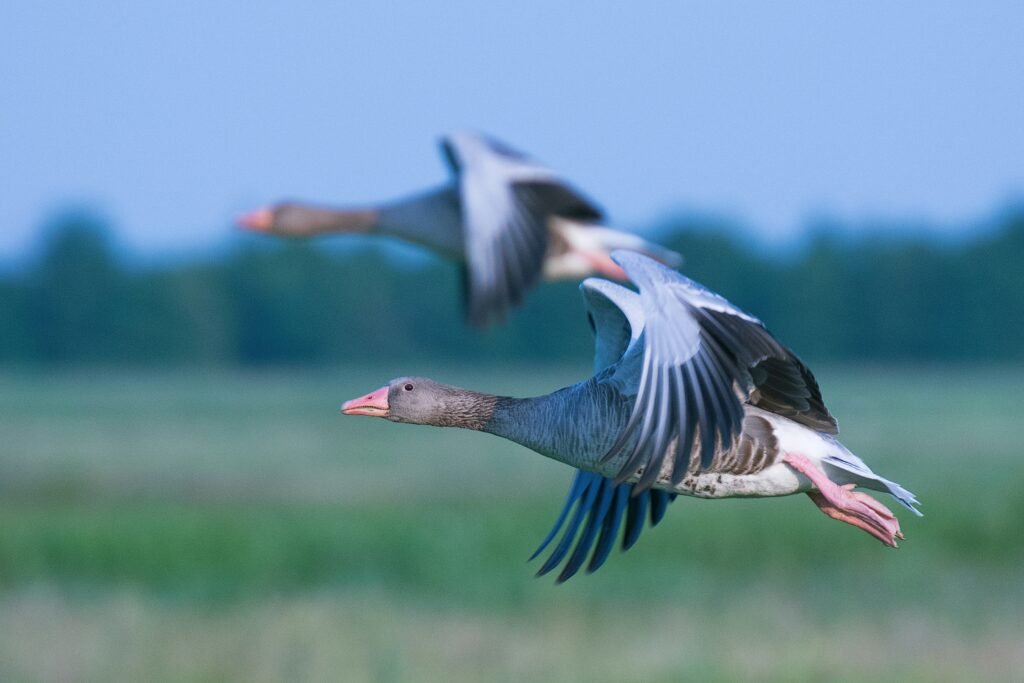
Hidden behind extensive sand dunes lies one of Scotland’s most important coastal nature reserves.
Rather than dramatic cliffs, Aberlady Bay offers peaceful tidal mudflats, saltmarshes and quiet beaches that attract thousands of migrating birds throughout the year.
This is one of the best places in Britain for birdwatching.
Walk Details
- Distance: 2–4 miles depending on route
- Time: 1–2 hours
- Difficulty: Easy
Flat paths make this suitable for most walkers.
Parking
A public car park is available near the reserve entrance, providing easy access to the coastal trails.
Facilities
Facilities are limited within the reserve itself, so bringing refreshments is recommended. Nearby Aberlady village offers cafés and pubs.
Wildlife Highlights
Depending on the season you may spot:
- Pink-footed geese
- Curlews
- Oystercatchers
- Shelducks
- Redshanks
- Eiders
- Little egrets
- Grey seals
During autumn migration the reserve becomes exceptionally busy with wading birds.
Hidden Gem
Continue along the beach at low tide to discover the remains of the historic wreck known as “The Gosford Wreck”, partially exposed in the sands.
3. Dunbar Harbour and Castle Walk
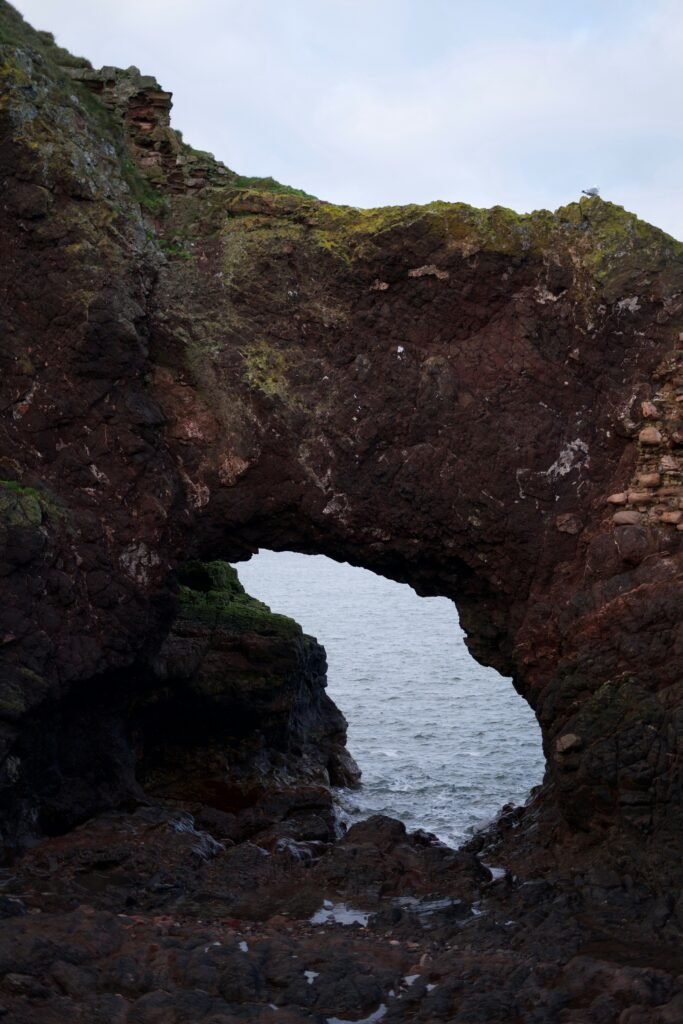
Dunbar perfectly combines maritime history with dramatic coastal scenery.
Its colourful working harbour remains active today, while nearby cliffs showcase fascinating volcanic geology. The ruined castle, once home to Mary, Queen of Scots, overlooks the harbour from a dramatic rocky outcrop.
This walk packs remarkable variety into a relatively short distance.
Walk Details
- Distance: 2–3 miles
- Time: Around 1.5 hours
- Difficulty: Easy
Mostly paved surfaces suitable for families.
Parking
Several town-centre car parks provide convenient access to the harbour.
Facilities
Dunbar offers excellent visitor amenities including:
- Public toilets
- Cafés
- Restaurants
- Bakery
- Independent shops
- Harbour cafés
- Supermarkets
Wildlife
Watch for:
- Harbour seals
- Eider ducks
- Shags
- Cormorants
- Rock pipits
In summer the harbour walls often support nesting seabirds.
Top Tip
Visit early in the morning when fishing boats are returning and the harbour is at its most atmospheric.
4. Yellowcraig Beach and Fidra Island
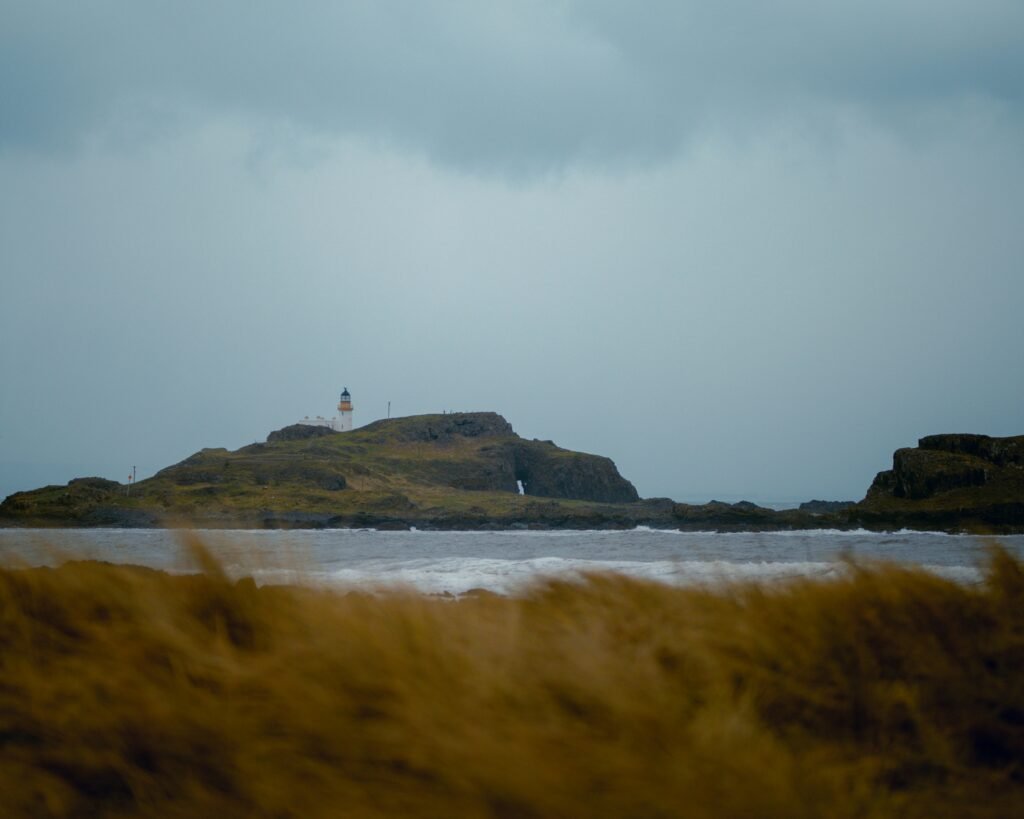
Yellowcraig is frequently considered one of Scotland’s finest beaches.
Golden sands stretch beneath mature pine woodland while the tiny island of Fidra sits just offshore. Many believe Fidra inspired Robert Louis Stevenson’s Treasure Island.
Families love the wide open beach, while photographers appreciate the iconic island views.
Walk Details
- Distance: 2–5 miles
- Time: 1–2 hours
- Difficulty: Easy
Several routes explore the beach, woodland and dunes.
Parking
A large pay-and-display car park sits immediately behind the beach.
Facilities
- Public toilets
- Seasonal café
- Picnic area
- Children’s play area
- Outdoor showers (seasonal)
Wildlife
The beach is excellent for spotting:
- Ringed plovers
- Oystercatchers
- Sandwich terns
- Grey seals
- Occasionally porpoises offshore
The surrounding woodland also attracts woodland birds including great spotted woodpeckers.
Photography Tip
Visit during low tide for reflections across the wet sand towards Fidra Island.
5. Gullane Bents and Gullane Point

Although famous for golf, Gullane also boasts one of East Lothian’s finest coastal walks.
The route combines extensive sandy beaches with rolling dunes before climbing gently to Gullane Point, where panoramic views stretch across the Firth of Forth.
The changing landscape makes this one of the county’s most varied shorter walks.
Walk Details
- Distance: 3–4 miles
- Time: Around 2 hours
- Difficulty: Easy to moderate
Mostly sandy paths with a few short climbs.
Parking
Several public car parks serve Gullane Bents, with easy beach access.
Facilities
Nearby Gullane village includes:
- Public toilets
- Cafés
- Restaurants
- Bakery
- Small supermarkets
- Accommodation
Wildlife
This stretch of coast is excellent for:
- Skylarks
- Meadow pipits
- Linnets
- Gannets offshore
- Seals
- Migrating waders during spring and autumn
The dune system is also home to a rich variety of wildflowers during late spring and summer.
Local Tip
Instead of turning back at Gullane Point, continue a little further along the quieter shoreline. This less-visited section often feels remarkably peaceful, even during the busy summer months, and can reward patient visitors with close views of seabirds feeding just offshore.
6. John Muir Country Park and Tyninghame Beach
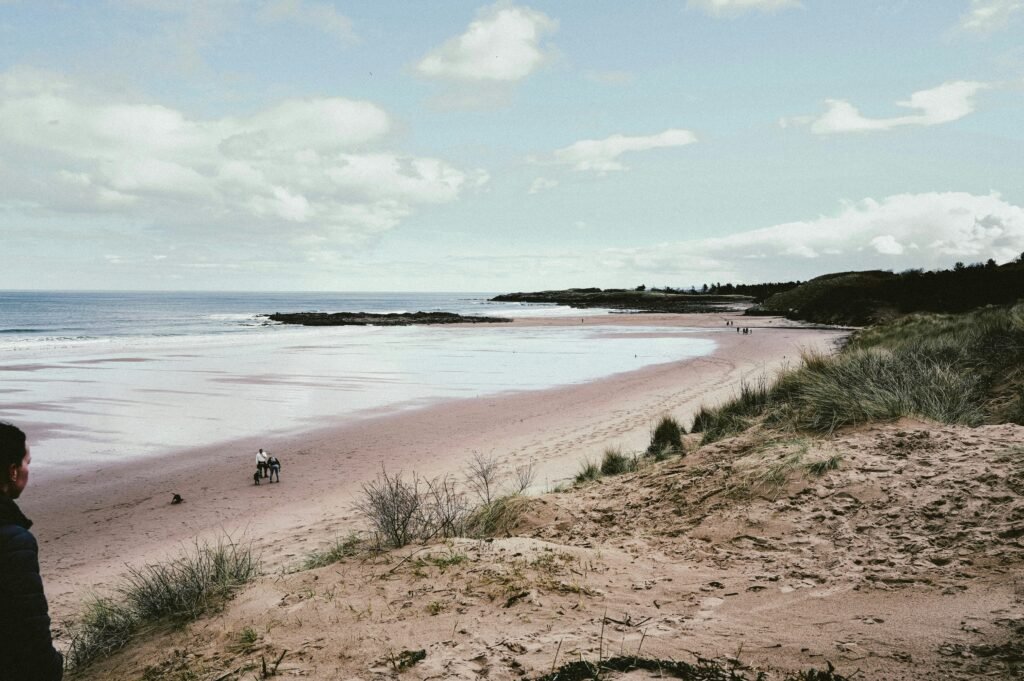
Named after the famous conservationist born in nearby Dunbar, John Muir Country Park is one of East Lothian’s most beautiful coastal landscapes. The park combines peaceful woodland, freshwater lagoons, extensive sand dunes and one of Scotland’s most picturesque beaches at Tyninghame.
Despite its popularity with locals, it often feels surprisingly tranquil once you leave the main access paths, making it a fantastic destination for walkers, photographers and wildlife enthusiasts alike.
Walk Details
- Distance: 3–6 miles (5–10 km), depending on your chosen route
- Time: 1.5–3 hours
- Difficulty: Easy
The paths are mostly wide, flat and well-maintained, making this an excellent choice for families and casual walkers.
Parking
A large public pay-and-display car park is located within John Muir Country Park, just a short walk from the woodland trails.
Facilities
Facilities include:
- Public toilets
- Picnic areas
- Information boards
- Seasonal refreshments nearby
- Additional cafés and shops in Dunbar
Wildlife Highlights
The mix of woodland, freshwater and coastline creates exceptional biodiversity. Look out for:
- Roe deer
- Grey squirrels
- Buzzards
- Great spotted woodpeckers
- Grey herons
- Little egrets
- Oystercatchers
- Ringed plovers
- Common seals resting offshore
During spring, the woodland floor is carpeted with bluebells, while autumn brings vibrant colours throughout the forest.
Photography Tips
The winding woodland paths opening onto the vast sandy beach provide wonderful compositions, particularly during the golden hour shortly after sunrise.
Hidden Gem
Follow the quieter woodland trails away from the beach and you’ll discover peaceful lagoons where dragonflies, damselflies and numerous waterbirds can often be seen.
7. Belhaven Bay and The Bridge to Nowhere
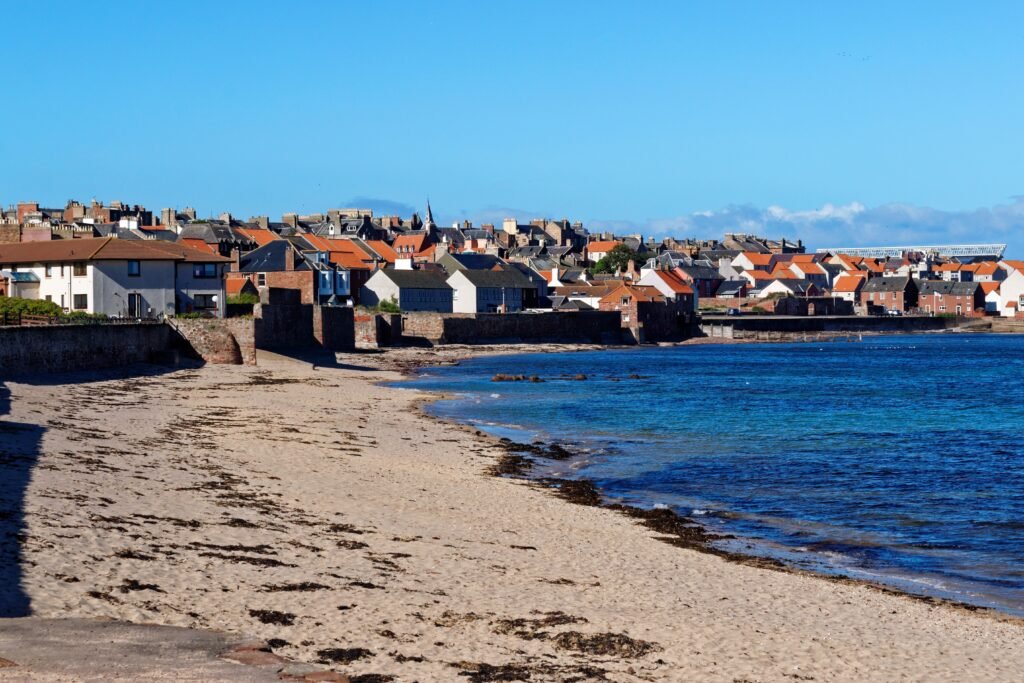
Belhaven Bay is one of East Lothian’s most iconic coastal locations, famous for its sweeping sands and the photogenic “Bridge to Nowhere”. At high tide, the bridge appears isolated by water, creating one of Scotland’s most recognisable coastal images.
The beach stretches for miles, backed by dunes and saltmarsh, providing plenty of space even during busy summer weekends.
Walk Details
- Distance: 2–5 miles (3–8 km)
- Time: 1–2.5 hours
- Difficulty: Easy
The beach is flat, though walking on soft sand can require a little more effort.
Parking
Large public parking areas are available close to Belhaven Bay, with direct access onto the beach.
Facilities
Nearby facilities include:
- Public toilets
- Café
- Restaurants in Dunbar
- Ice cream kiosks (seasonal)
- Picnic areas
Wildlife Highlights
This area attracts:
- Curlews
- Lapwings
- Redshanks
- Shelducks
- Grey seals
- Dolphins (occasionally offshore)
The estuary is particularly important for overwintering birds.
Photography Tips
Visit at high tide to capture the famous bridge surrounded by water, or at sunset when the reflections across the wet sand can be spectacular.
Local Tip
Low tide reveals enormous expanses of sand perfect for long beach walks, but be mindful of incoming tides when exploring the outer shoreline.
8. Seacliff Beach and Tantallon Cliffs
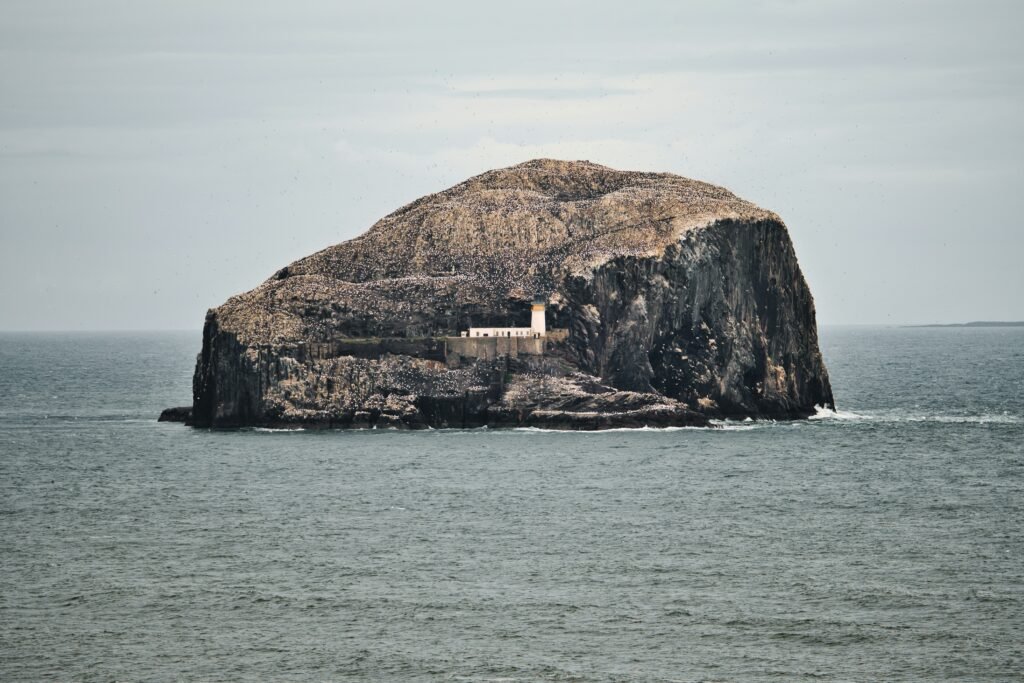
Tucked away behind private farmland lies one of Scotland’s most spectacular hidden beaches. Seacliff Beach remains something of a secret compared to neighbouring North Berwick, rewarding visitors with dramatic views towards Bass Rock and Tantallon Castle.
The volcanic cliffs, secluded sands and peaceful atmosphere make this a favourite among photographers and locals.
Walk Details
- Distance: 2–4 miles (3–6 km)
- Time: 1–2 hours
- Difficulty: Easy to moderate
Some uneven paths lead down to the beach, with optional cliff-top sections offering magnificent viewpoints.
Parking
A privately operated car park provides convenient access to the beach. Parking charges usually apply.
Facilities
Facilities are minimal.
Visitors should bring:
- Drinking water
- Snacks
- Appropriate footwear
The nearest cafés and restaurants are in North Berwick.
Wildlife Highlights
The towering cliffs support thriving seabird colonies including:
- Guillemots
- Razorbills
- Puffins (seasonally visible offshore)
- Fulmars
- Kittiwakes
- Gannets
Grey seals frequently haul out on nearby rocks.
Photography Tips
The old harbour, carved directly into the rocks, creates a unique foreground for photographs looking towards Bass Rock.
Hidden Gem
Walk towards the western end of the beach to enjoy quieter viewpoints where most visitors never venture.
9. Cockenzie and Port Seton Harbour Walk
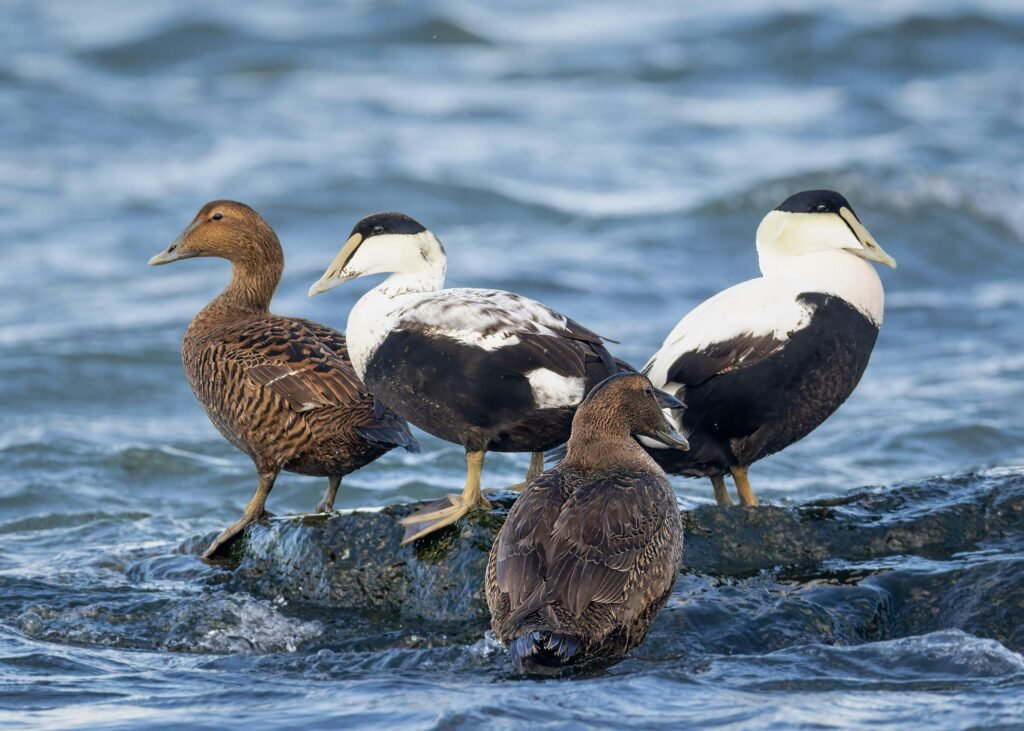
East Lothian isn’t only about dramatic cliffs and sandy beaches. The traditional fishing villages of Cockenzie and Port Seton offer a fascinating glimpse into Scotland’s maritime heritage.
Colourful fishing boats, stone harbours and attractive waterfront cottages make this one of the county’s most charming short walks.
Walk Details
- Distance: Approximately 2 miles (3 km)
- Time: Around 1 hour
- Difficulty: Very easy
Mostly level promenades and harbour paths.
Parking
Free public parking is available close to both harbours.
Facilities
Nearby you’ll find:
- Public toilets
- Cafés
- Fish and chip shops
- Convenience stores
- Children’s play areas
Wildlife Highlights
Although urban in places, the shoreline attracts:
- Turnstones
- Ringed plovers
- Eider ducks
- Cormorants
- Harbour seals
Winter often brings impressive numbers of coastal birds feeding around the harbour walls.
Local Tip
Spend time watching the fishing boats before enjoying freshly caught seafood from one of the nearby cafés.
10. Barns Ness Lighthouse Coastal Walk
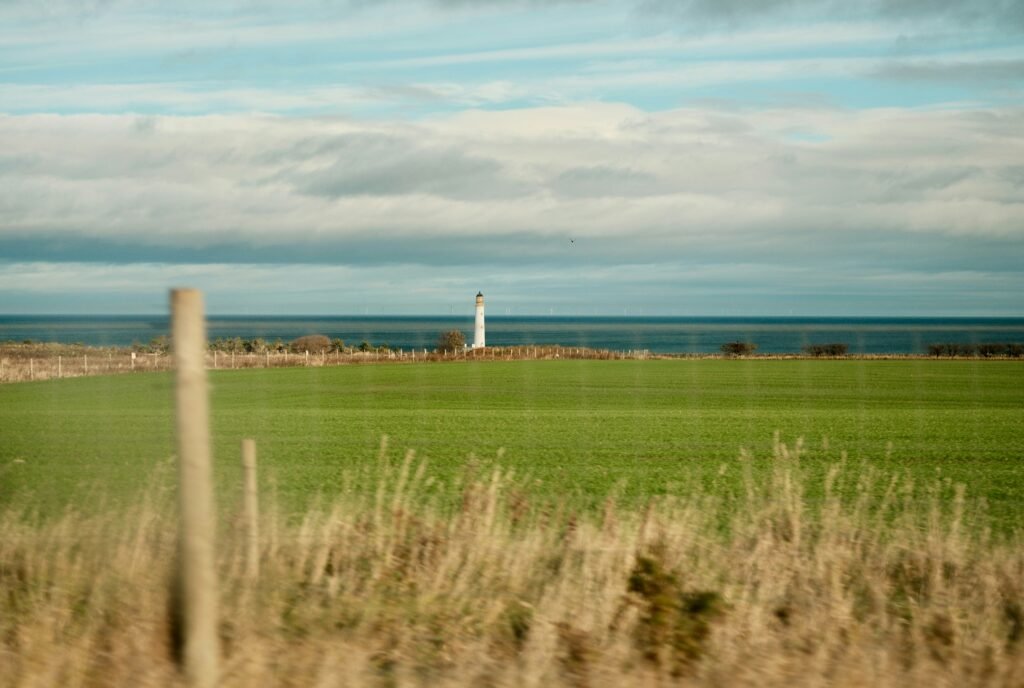
Often overlooked by visitors rushing between Dunbar and North Berwick, Barns Ness offers one of East Lothian’s most peaceful cliff-top walks.
The white lighthouse sits proudly above rugged cliffs where waves crash against ancient volcanic rocks below.
It’s an ideal destination if you’re seeking solitude and uninterrupted sea views.
Walk Details
- Distance: 3–5 miles (5–8 km)
- Time: Around 2 hours
- Difficulty: Moderate
The coastal paths are generally grassy with some uneven sections near the cliffs.
Parking
Small public parking areas are available close to the lighthouse access road.
Facilities
There are no visitor facilities at the lighthouse itself.
The nearest cafés, restaurants and shops are located in Dunbar.
Wildlife Highlights
Barns Ness is an outstanding location for observing:
- Fulmars
- Kittiwakes
- Guillemots
- Gannets
- Peregrine falcons
- Grey seals
Lucky visitors occasionally spot dolphins or minke whales offshore during the summer months.
Photography Tips
The lighthouse framed against the dramatic coastline creates particularly striking images during sunrise when the cliffs catch the first light of the day.
Hidden Gem
Continue beyond the lighthouse to discover quieter sections of coastline where you’ll often have the views entirely to yourself, even on sunny weekends.
11. Prestonpans Coastal Walk

Best known for its role in Scottish history, Prestonpans also offers an enjoyable stretch of coastline that’s often overlooked by visitors. The walk follows sections of the John Muir Way, combining sea views with public art, saltmarsh habitats and fascinating reminders of the area’s industrial and military past.
This is an excellent walk for those who enjoy history just as much as scenery.
Walk Details
- Distance: 2–4 miles (3–6 km)
- Time: 1–2 hours
- Difficulty: Easy
The paths are mostly surfaced and suitable for walkers of all abilities.
Parking
Free public parking is available near Prestonpans promenade and the town centre.
Facilities
Nearby you’ll find:
- Public toilets
- Cafés
- Convenience stores
- Supermarkets
- Bus connections
Wildlife Highlights
Although close to the town, the shoreline attracts:
- Oystercatchers
- Curlews
- Eider ducks
- Turnstones
- Cormorants
The mudflats become particularly active during migration seasons.
Top Tip
Keep an eye out for the famous Prestonpans Murals around the town before or after your walk—they provide a fascinating insight into the area’s rich history.
12. Gullane to Aberlady Coastal Walk
If you’ve already explored Gullane Bents, continue east towards Aberlady for one of the county’s most scenic longer beach walks. This stretch combines rolling dunes, wide sandy beaches and sweeping views across the Firth of Forth.
Despite linking two popular destinations, much of the route feels wonderfully peaceful.
Walk Details
- Distance: Around 6 miles (10 km) return
- Time: 3 hours
- Difficulty: Easy
Walking is mostly on sand, grassy tracks and well-maintained coastal paths.
Parking
Public parking is available at both Gullane Bents and Aberlady.
Facilities
Facilities can be found in both villages, including:
- Public toilets
- Cafés
- Restaurants
- Small shops
- Picnic areas
Wildlife Highlights
The extensive dunes support:
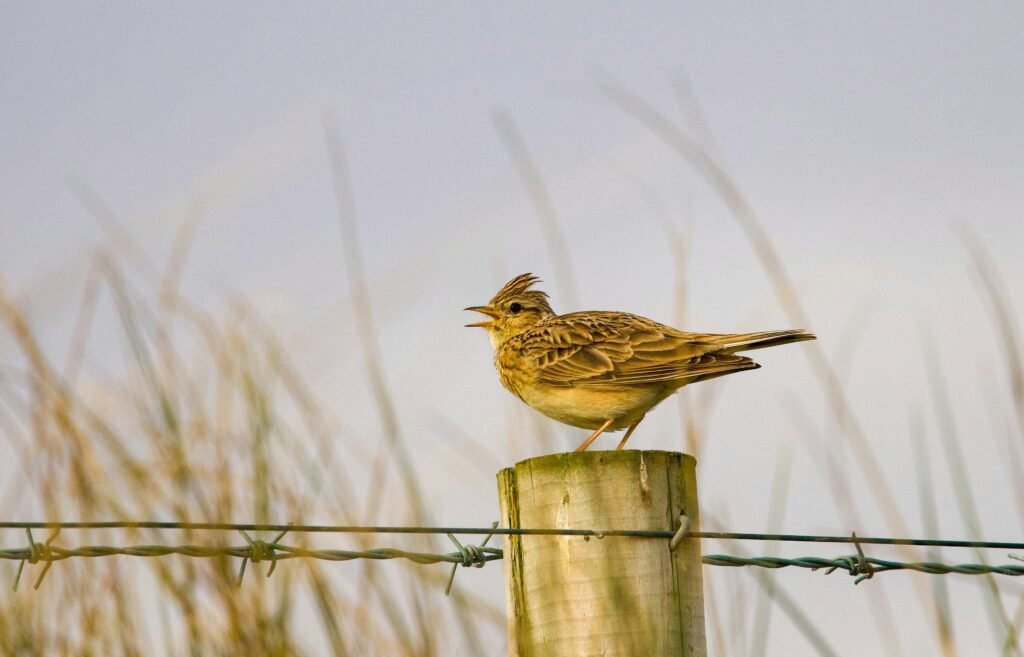
- Skylarks
- Meadow pipits
- Linnets
- Ringed plovers
- Butterflies during summer
Offshore you may also spot seals and, with luck, dolphins.
Hidden Gem
Take time to explore the quieter dune paths rather than remaining on the beach. During summer they’re filled with orchids, wild thyme and colourful coastal flowers.
13. Dunbar Battery to Whitesands Bay
Just east of Dunbar Harbour lies a quieter coastal route that many visitors overlook. Beginning near the old Battery, the path follows dramatic rocky coastline before reaching the peaceful sands of Whitesands Bay.
This route offers excellent geological interest and fantastic sea views.
Walk Details
- Distance: Approximately 3 miles (5 km)
- Time: Around 1.5 hours
- Difficulty: Moderate
Some rocky and uneven sections require reasonable footwear.
Parking
Public parking is available throughout Dunbar.
Facilities
Facilities remain close by in Dunbar, including:
- Cafés
- Public toilets
- Restaurants
- Shops
- Accommodation
Wildlife Highlights
This rocky shoreline attracts:
- Rock pipits
- Fulmars
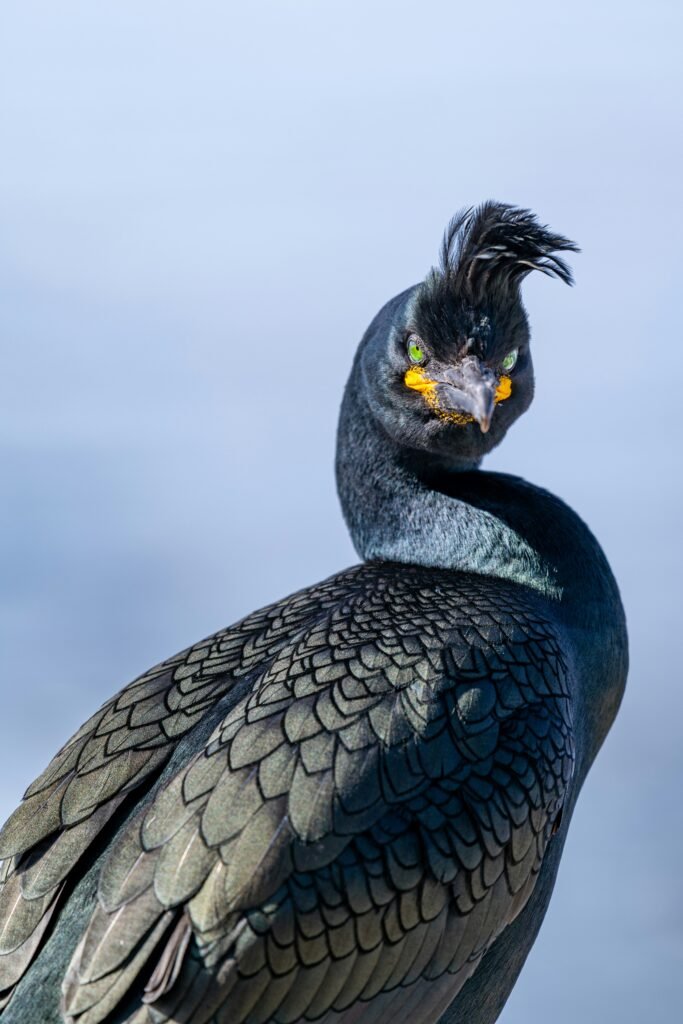
- Shags
- Grey seals
Rock pools can reveal crabs, starfish, sea anemones and other fascinating marine life during low tide.
Photography Tip
The volcanic rock formations provide superb foreground interest when photographing sunrise over the North Sea.
14. North Berwick Harbour and Milsey Bay
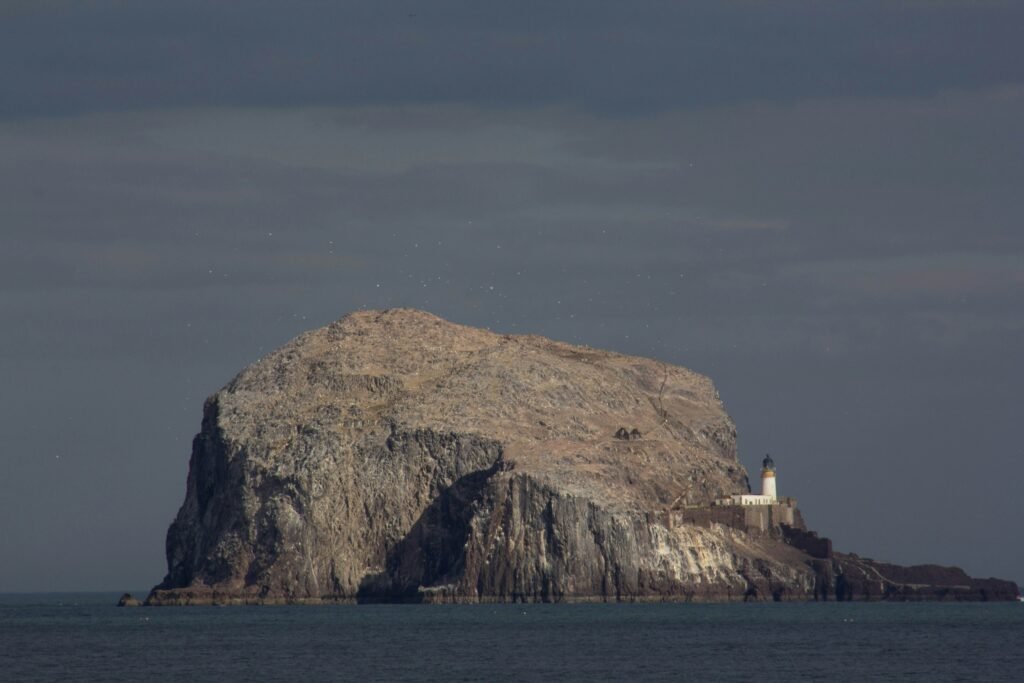
Many visitors spend time around the harbour before heading elsewhere, but combining it with a walk to Milsey Bay creates one of East Lothian’s most enjoyable short outings.
Colourful fishing boats, sandy beaches and constant views of Bass Rock make this ideal for families and photographers alike.
Walk Details
- Distance: 2–3 miles
- Time: Around 1 hour
- Difficulty: Very easy
Suitable for almost everyone.
Parking
Numerous public car parks are available throughout North Berwick.
Facilities
Everything you might need is within walking distance:
- Public toilets
- Cafés
- Restaurants
- Ice cream parlours
- Bakeries
- Outdoor shops
- Supermarkets
Wildlife Highlights
Bass Rock dominates the horizon and supports one of the world’s largest northern gannet colonies.
Closer to shore you may also encounter:
- Eider ducks
- Shags
- Cormorants
- Grey seals
Local Tip
Visit during the evening when day visitors have left. The harbour becomes wonderfully peaceful and often provides beautiful reflections in calm water.
15. Torness Coastal Path
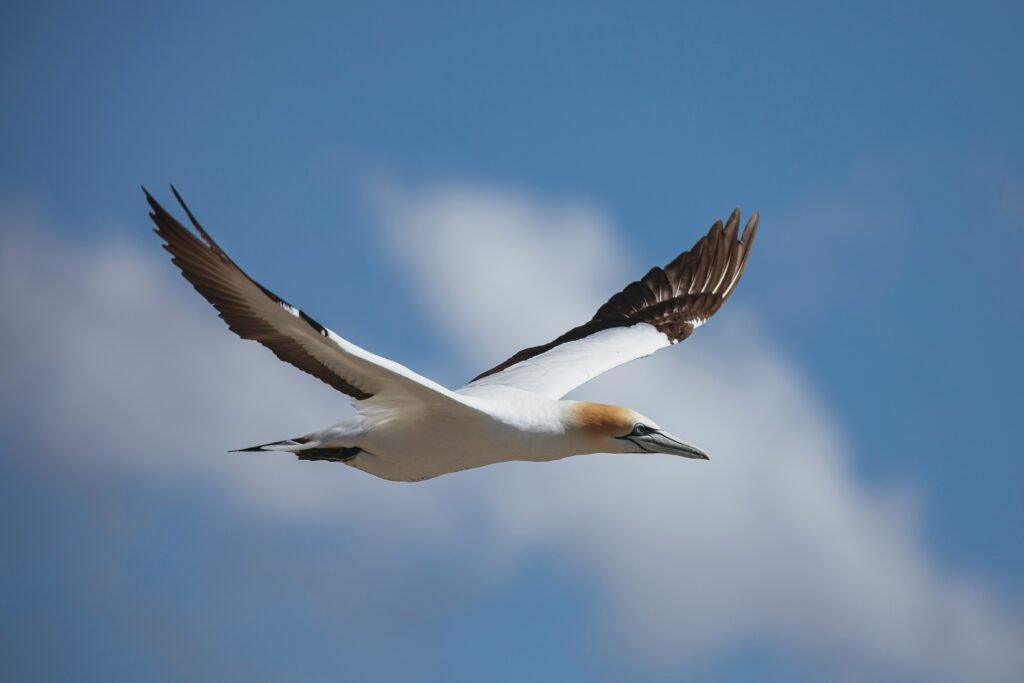
Although the nearby power station often dominates people’s expectations, this surprisingly wild stretch of coastline remains one of East Lothian’s hidden treasures.
The rocky shoreline, grassland and sea cliffs provide excellent walking with relatively few visitors.
Walk Details
- Distance: 4–5 miles (6–8 km)
- Time: Around 2–2.5 hours
- Difficulty: Moderate
Some rough grassy paths and uneven ground.
Parking
Limited public parking is available near access points along the coastal road.
Facilities
There are very few facilities nearby.
Bring:
- Water
- Snacks
- Waterproof clothing
- Binoculars
Wildlife Highlights
Excellent opportunities exist to see:
- Fulmars
- Kittiwakes
- Gannets
- Meadow pipits
- Roe deer
- Grey seals
The quieter nature of this stretch makes it particularly rewarding for wildlife photographers.
Hidden Gem
Patient visitors occasionally witness dolphins travelling parallel to the shoreline, particularly during calm summer mornings.
Tips for Exploring East Lothian Coastal Paths
To make the most of your visit:
- Wear sturdy footwear, as some cliff paths can become muddy after rain.
- Carry waterproof clothing, even during summer.
- Check tide times before exploring beaches or tidal sections.
- Respect wildlife by keeping dogs under close control near nesting birds.
- Bring binoculars if you enjoy birdwatching or spotting marine mammals.
- Visit early in the morning or later in the afternoon to enjoy quieter trails and softer light for photography.
- Leave no trace by taking all litter home and respecting protected habitats.
Best Time to Visit
Spring (March–May): Wildflowers begin to bloom, seabirds return to their nesting colonies and temperatures are comfortable for walking.
Summer (June–August): Long daylight hours make this the perfect season for exploring beaches and harbour villages, although popular locations can become busy.
Autumn (September–November): One of the best seasons for wildlife enthusiasts, with migratory birds arriving in large numbers and beautiful golden light along the coastline.
Winter (December–February): Expect dramatic seascapes, peaceful beaches and excellent opportunities for storm watching, though warm, waterproof clothing is essential.
Frequently Asked Questions
What is the best coastal walk in East Lothian?
Many people consider the North Berwick to Tantallon Castle Walk the finest route thanks to its spectacular combination of castles, cliffs, beaches and Bass Rock views.
Are East Lothian coastal walks suitable for families?
Yes. Walks such as Yellowcraig Beach, Gullane Bents, Belhaven Bay and North Berwick Harbour are ideal for families with young children.
Can you see puffins in East Lothian?
Yes. Puffins can usually be seen offshore around Bass Rock and nearby islands during the breeding season, typically from late spring into summer. Boat trips from North Berwick offer the best viewing opportunities.
Is parking available at most coastal walks?
Yes. Most of the popular starting points have public parking, although charges may apply at some locations, particularly during peak season.
Can you see seals along the East Lothian coast?
Absolutely. Grey seals are regularly spotted at North Berwick, Seacliff Beach, Belhaven Bay, Aberlady Bay and several rocky sections of coastline throughout the year.
Final Thoughts
East Lothian may be one of Scotland’s smaller counties, but its coastline delivers an astonishing variety of landscapes. From colourful harbour villages and expansive sandy beaches to dramatic cliffs, ancient castles and internationally important wildlife reserves, every section of coast offers something unique.
Whether you’re following the famous John Muir Way or simply searching for a peaceful afternoon walk, you’ll discover unforgettable scenery around almost every headland. Take your time, venture beyond the busiest beaches and don’t be afraid to explore the quieter corners—you’ll often be rewarded with empty stretches of coastline, incredible wildlife encounters and some of the finest sea views in Scotland.
For walkers, photographers, birdwatchers and anyone who loves the coast, East Lothian is a destination you’ll want to return to time and time again.
More Than Just Coastal Walks
One of the joys of exploring East Lothian is how varied the coastline becomes within a relatively short distance. One moment you’re wandering through peaceful woodland, the next you’re crossing wide sandy beaches, following dramatic cliff-top trails or exploring centuries-old fishing harbours.
Many visitors simply drive between the popular beaches, but slowing down and walking even a short section of the coastline reveals hidden coves, fascinating geology and abundant wildlife that would otherwise be missed. The ever-changing light, especially during sunrise and sunset, means no two visits ever feel quite the same.
Whether you’re hoping to photograph Bass Rock, watch seals basking on rocky outcrops or simply enjoy a relaxing seaside stroll followed by fresh seafood in a harbour café, East Lothian offers some of the most rewarding coastal experiences anywhere in Scotland.
In Part 3, we’ll explore five more fantastic coastal walks, including some of East Lothian’s quieter hidden gems, before finishing with frequently asked questions, planning advice, a conclusion, SEO meta description and a social media caption ready for sharing.
Planning Your East Lothian Coastal Adventure
Many of these walks link into sections of the John Muir Way, making it easy to combine routes if you’re looking for a longer day out. Spring and early summer bring carpets of coastal wildflowers, while autumn is one of the best times for birdwatching as thousands of migratory birds arrive along the shoreline. Even in winter, the coastline remains spectacular, with dramatic seas and far fewer visitors.
Before setting out, check tide times if you plan to explore beaches or tidal areas such as Aberlady Bay, wear sturdy footwear for uneven coastal paths, and pack binoculars if you enjoy wildlife watching. Scotland’s weather can change quickly, so waterproof clothing and extra layers are advisable in every season.